
GROWTH OF FABRIC WASTE
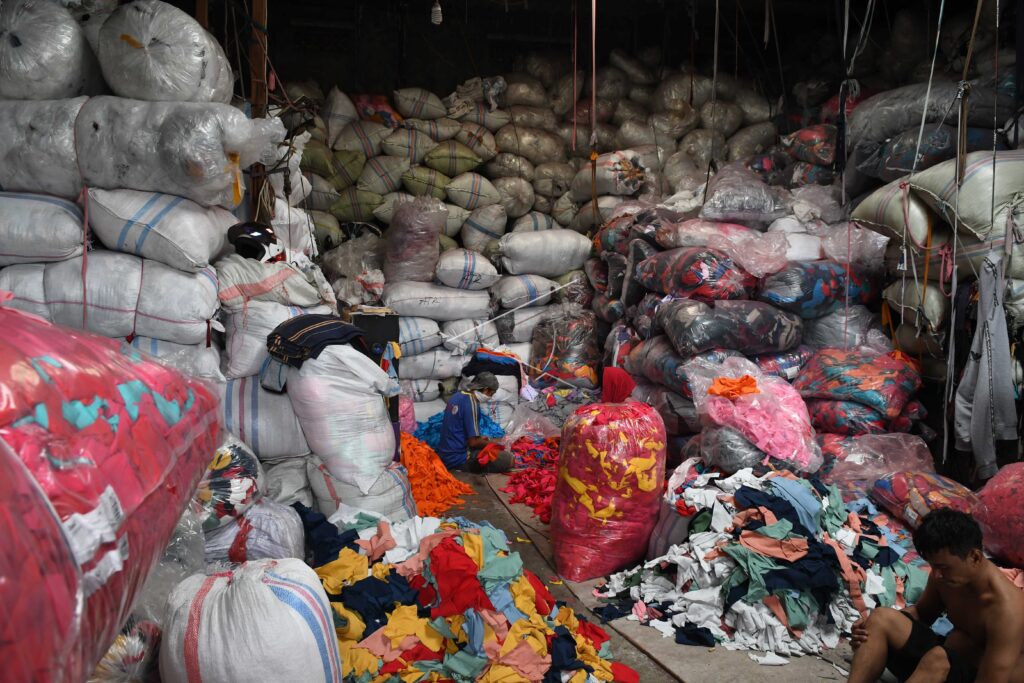
A collector poses with the scraps of textile fabric that has been cut up at his shelter in the North Jakarta area.
The piece of cloth is a reflection of the climate of capitalist behavior in the "fast fashion" industry and human consumptive culture, causing over-consumption of waste.
Fast fashion is more or less translated as cheap clothing with a short circulation time with abundant fashions that follow the latest trends.
According to the author of 'Overdressed: The Shockingly High Cost of Cheap Fashion', Elizabeth Cline, the affordability of prices and the rapid production of the latest fashions have made a shift in use value from clothing to prioritizing the value of signs as a form of social identity.
Therefore, when users are bored, they don't feel sorry for throwing away the clothes that fill their closet (even though they haven't used it for a long time) to be filled with the latest collections released by fast fashion retailers.
Taken from zerowaste.id, fast fashion is a term used by the textile industry which has various fashions that changing in a very short time, and use poor quality raw materials, so they are not durable.
Fast fashion manufacturers can produce up to 42 fashions in 1 year, which can result in overproduction that leads to burning of unsold clothing stocks, as did retailer H&M in 2017 (about 19 tons or the equivalent of 50,000 jeans) and stock Burberry in 2018 (worth 38 million US dollars).
Dana Thomas in her book "Fashionopolis" says some fast fashion brands may not design their products to last long, because more than 60 percent of the fabric fibers today are made from synthetic materials instead of threads so it will be cheaper to produce new clothes than to recycle the threads from second clothes. And when the clothes end up in a landfill (TPA), then the clothes will suitably decompose.
Meanwhile, a report from the Ellen McArthur Foundation said the textile industry is currently still using the outdated method, namely the linear (make-use-waste) economic model. This method generates waste and pollution from the world's fashion business (estimated at US$500 billion per year).
This can be a serious threat to the environment. For this reason, the public is expected to change their consumptive nature in clothing while the government must redesign the textile economic industry model, based on environmentally friendly circular economy principles.
Photos and text : Muhammad Adimaja
Editor : Fanny Octavianus